
This week the RPV Calculator learned something new: you can now ask Claude, ChatGPT or Mistral Vibe about the Belgian procedural indemnity, and instead of guessing, they ask my calculator.
Hi, I’m Pieter-Jan. This is my first post here, so a short introduction first. I’m a developer from Ghent with a background in legal tech, and next to my job I run that calculator. I want to use this Substack to write about what I build, how I build it (these days mostly together with AI), and what I learn along the way. No fixed schedule yet. We’ll see.
One calculator, one job
The RPV Calculator does one thing. It calculates the rechtsplegingsvergoeding, the amount the losing party in a Belgian court case pays towards the other side’s lawyer. The amounts come from a Royal Decree of 2007, and they move with the consumer price index. Since 2007 they’ve been indexed six times. So the right amount depends on the claim, the type of court and the date. Lawyers and bailiffs look this up all the time, and with an old table it’s easy to get it wrong.
More and more people I know don’t open a website for a question like that anymore. They ask Claude or ChatGPT. That’s where it gets tricky, because a language model doesn’t know which indexation is in force today. It gives you an amount that sounds right. Maybe it was right two years ago.
So I thought: instead of hoping the models get better at Belgian tariffs, why not let them use my calculator?
Letting the assistant ask
There’s an open standard for this called MCP, the Model Context Protocol. It lets an AI assistant call tools on someone else’s server. I added an MCP server to the calculator at https://www.rpv-calculator.be/mcp. You add that URL as a connector in Claude, ChatGPT or Mistral Vibe (or in Cursor, VS Code and so on), and from then on the assistant asks the calculator instead of guessing.
There are three tools. One calculates the minimum, base and maximum for a claim, on any date. One gives the full rate table. And one tells you where the indexation stands and when the next one is expected. No account, no login. Every answer links back to the website so you can check the numbers yourself, which for lawyers is kind of the point.
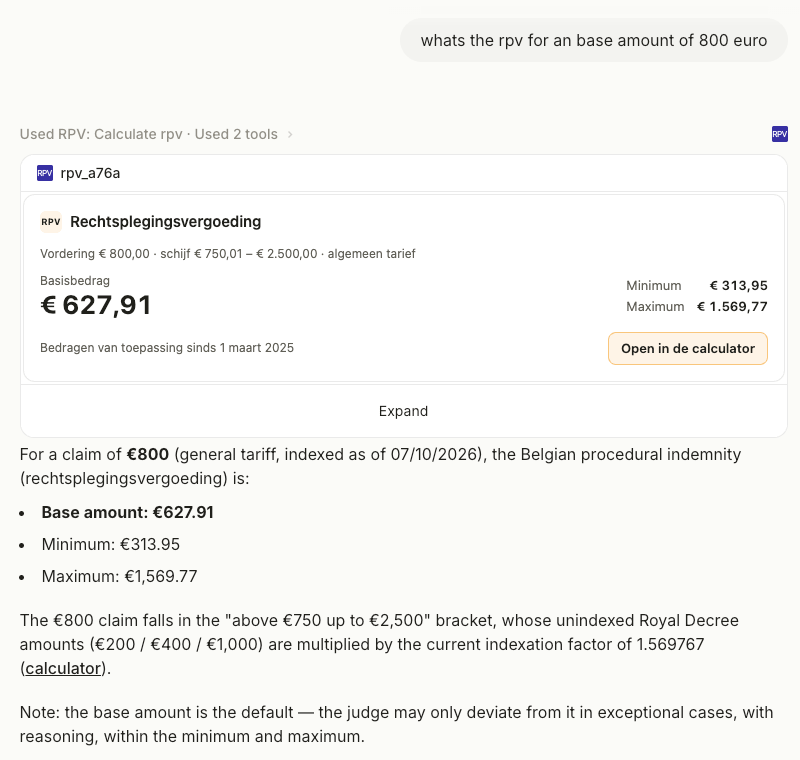
Asking Mistral Vibe about a claim of €800. The card comes from the calculator, the text around it from Mistral.
Cards, take two
My first version showed a card with every answer, dropdowns and all. It looked great on its own and was way too much in an actual conversation. You ask one question and half your screen is a form. So I removed them again and kept only one: a chart for the indexation.
Then I tried again, smaller. I built a little page that fakes a chat, put seven versions of each card in it, and kept throwing them out until one felt right. What survived is quiet: the base amount, the minimum and maximum, and since when those amounts apply. For the indexation there’s a bar that shows how close the next one is. The rate table shows a chart and the list together, and clicking one highlights the other. I’m a bit too proud of that one, honestly.
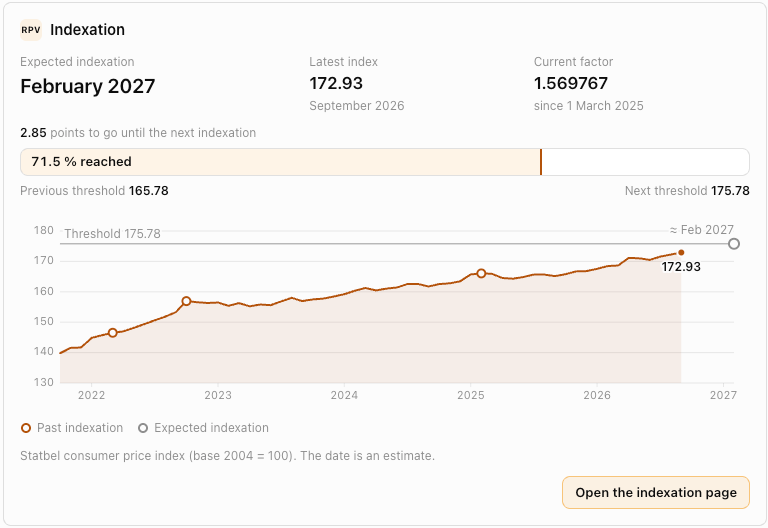
The indexation card in ChatGPT: 71.5% of the way to the next indexation, expected around February 2027.
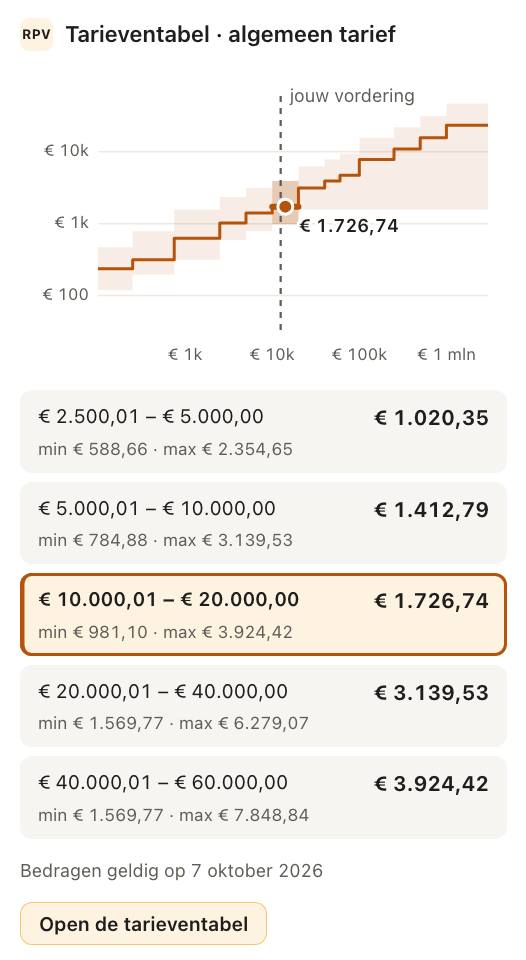
The rate table, with the bracket of a €12,500 claim selected
.
And if an assistant doesn’t show cards, nothing breaks. It gets the same numbers as text and answers from those.
Things I didn’t see coming
Most of my time went into the tool descriptions, which surprised me. The website and the MCP server use exactly the same calculation, so the code itself was mostly plumbing. But the model reads those descriptions to decide which tool to call and what to fill in. They’re instructions for a very literal colleague. If the description is vague about court types, the model guesses. If it doesn’t say the date matters, it never asks for one. And if it doesn’t say which language to answer in, you get a Dutch card for an English question. Ask me how I know.
People also type amounts the Belgian way: “2.500,50”. So the tool just accepts that. I’d rather handle it once on my side than hope every assistant converts it correctly.
And one I only found out later. claude.ai doesn’t call a connector from your laptop, it calls it from Anthropic’s servers. So to my server, all claude.ai users look like they come from a handful of addresses. I had set a rate limit per IP address. You can imagine. I’m keeping an eye on it.
About privacy, because that’s the first thing a lawyer will ask: the server only sees what the assistant passes to the tools, so a court type, an amount and a date. Never the conversation itself. I don’t store IP addresses, only a salted hash to count requests, and amounts only end up in my statistics as rough ranges.
Try it, and tell me
If you work with these amounts and you use Claude, ChatGPT or Mistral Vibe anyway, give it a try. It’s free, and the steps for each assistant are on the site. It’s also listed in the official MCP Registry, if that means something to you.
If you get a strange answer, please let me know. That’s honestly the most useful thing you can send me right now. And if you’re building something like this yourself, I’m happy to spar.
Pieter-Jan